Upcycling: fashion’s new infringement frontier
Contacts


Upcycling is meant to create higher-value products from discarded materials, but can this major fashion trend also violate intellectual property rights? Yes, over the last few years it has brought major brands like Chanel, LVMH, Rolex and Hermès into court.
In many instances, upcycling’s creativity, craftsmanship and alleged eco-friendly aspects are not enough to pass legal scrutiny. As case law in the United States, Europe and Asia increasingly shows, there are no full-proof solutions for navigating the issue’s IP complexities.
As buttons are transformed into earrings and used tyres into designer furniture, brands should look to their strategic enforcement policies and authorised enforcement systems, among other resources.
What’s upcycling’s IP angle?
Upcycling quickly gained traction because it fits perfectly with the current desire for sustainability and a more circular economy. Some also regard it as a creative way to combine the work of different creators, thus mimicking the continuing trend of brand collaborations. But what if the original product’s IP owner did not consent to its alteration and reuse as part of an upcycled product?
Through the principle of exhaustion, IP laws generally allow for the resale of original products within a certain country or region. Once a product is placed on the market by the right owner or with their consent – for example, by licensees or authorised distributors – the IP rights are usually exhausted. This means the right owner cannot prevent third parties from reselling these products. In different forms, this applies across trademark law, copyright and design law.
However, it doesn’t always extend to altered products. For example, under EU trademark legislation, even though an initial authorised sale of branded products within the European Economic Area (EEA) can result in exhaustion of trademark rights for those products, the trademark owner may still object to further marketing of the products if there are legitimate reasons. Legitimate reasons exist when the condition of the products is modified or altered after being placed on the market. This is precisely what happens in upcycling.
First cases in the United States
In the United States, courts have seen several upcycling cases, all of which centred around trademark rights and the principle of exhaustion, or “first sale doctrine” as it is known in the United States.
To name just a few, Chanel initiated legal proceedings against Shiver+Duke over the manufacture of jewellery from buttons allegedly derived from the renowned French fashion house's clothing. Levi's took action against Coperni for the sale of “reworked” Levi's products. LVMH filed suit against Sandra Ling over accessories and clothing made with allegedly deconstructed Louis Vuitton products. Other similar disputes include those between Rolex and La Californienne, between Nike and MSCHF and between Ralph Lauren and VNDS.
Notably, most of these cases have since settled and therefore haven’t provided much guidance on upcycling.
Europe’s first decisions
In Europe, the Swiss Federal Supreme Court issued a January 2024 landmark upcycling-related ruling on the customisation of Rolex watches.
Crucially, the Swiss Court distinguished between two scenarios. Firstly, customisation services offered at a client’s request without the product changing hands, and secondly, companies that sell customised goods, as is usually the case with upcycling. In the first situation, trademark infringement is precluded as the customisation is strictly for private use. According to the Swiss court, selling modified goods, however, violates trademark law.
In France, the Paris Court of First Instance ruled on the first properly named EU upcycling case in Hermes v S.A.S. Maison R&C et al. in April 2025. The case centred around denim jackets featuring “reworked” fragments of original Hermès scarves and covered both trademark and copyright law.
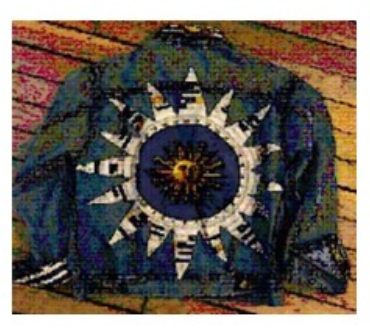
On copyright, the Court considered – in line with the EU Court of Justice’s ruling in Art & Allposters– that incorporating Hermès’s copyright-protected scarves into the denim jackets constituted a change of medium or form compared to the original product, and therefore precludes copyright exhaustion.
The Court also fouled R&C for trademark infringement, both for the denim jackets that contained the Hermès word mark (as cut out from the original scarves and attached to the jackets) and those without the word mark (because it had been expressly cut out of the scarves). The defendants couldn’t prove the authorised first sale of the original scarves within the EEA that is necessary to claim exhaustion. The Court further rejected the defence of referential trademark use, because the Hermès mark was no longer used to refer to Hermès products, but to R&C products instead. And although the question whether removal of trademarks is in itself infringing is much-debated on an EU level following Mitsubishi v Duma,French trademark law is clear and lists this as a separate act of infringement.
Interestingly, the Court also considered the defendant’s argument that the principles of freedom of artistic expression and environmental protection should prevail over intellectual property rights. While acknowledging the significance of these rights, the Paris Court concluded that in the present case, the denim jackets possessed no artistic character beyond that of the original Hermès designs, and the defendant’s primary objective was commercial gain at Hermès’s expense rather than environmental protection.
While opinions may differ on artistic merit, and the re-use of products should naturally be encouraged, this French case confirms that upcycling initiatives involving well-known brands often have little to do with real sustainability and everything with trying to free-ride on a famous brand’s reputation. As the Paris Court noted, the original Hermès scarves were still in a good state themselves and represented a value on the resale market.
A look to the East
While the European debate focuses on exhaustion of IP rights, the High Court of Singapore went a step further.
A recent decision determined that accessories purportedly crafted from original Louis Vuitton products even constituted 'use of a counterfeit trademark' , which is defined in the Singapore Trade Marks Act as requiring deceptive intent. The Court emphasised that, irrespective of any authenticity of the materials used, the products were unlawful because they were not original Louis Vuitton products.
The Court's approach is unambiguous in its complete disregard of upcycling as a relevant circumstance to exclude the defendant's liability. It is part of a wider range of decisions from other Asian countries, including China and South Korea, which equally deal with the deconstruction of leather goods – sometimes locally called “reform” – and which have likewise resulted in favourable decisions for the trademark owners.
Practical recommendations
So, what’s a luxury brand to do?
As case law increasingly shows, keeping existing original trademarks affixed to upcycled products is likely to result in trademark infringement. Removing the original marks may in some jurisdictions also present issues. Disclaimers have often been brought up as a solution. However, aside from the simple difficulty of drafting a disclaimer that sufficiently excludes any risk of confusion at point-of-sale, this does not account for post-sale confusion. In line with the EU Court of Justice’s Arsenal decision,) a mere disclaimer at point-of-sale (and perhaps even on a commonly invisible neck label inside the clothing) is insufficient to prevent trademark infringement.
Neither removing trademarks nor disclaimers solve the question of copyright-based claims, which apart from the recent French case have so far been mainly disregarded.
As upcycling practices nonetheless continue to grow, brand owners should consider investing in a strategic enforcement policy. At the same time, they must tread carefully given the public relations sensitivities surrounding supposed sustainable practices.
Brand owners may also want to look at developing their own authorised upcycling systems. For example, through licensing agreements or partnerships with third parties, as well as digital product passports to ensure the traceability of authorised modifications. This is important because of upcoming regulatory developments, including the EU Green Deal and the Circular Economy Action Plan. Specifically, upcycling may present an alternative for dealing with next year’s EU ban on the destruction of unsold consumer goods in the fashion industry under the Ecodesign Regulation.
First published in Luxury Law and the Global Legal Post.